Iowa Schools Get 2% Funding Boost
Is it enough?
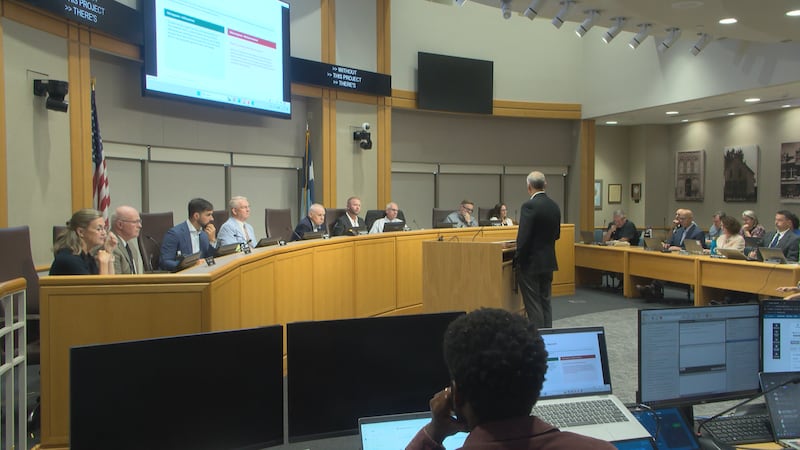
DES MOINES, Iowa (Gray Media Iowa State Capitol Bureau) -- The Iowa Senate, by a vote of 27-20 Monday afternoon, approved the agreement to increase funding for public school districts in the coming year by 2%, a result of a compromise between majority Republican leaders in both legislative chambers and Governor Kim Reynolds.
While Republicans tout the agreement as a responsible approach to taxpayer dollars, Democrats argue the increase is simply insufficient to meet the needs of Iowa’s educators and students.
Two Different Philosophies on School Funding
The 2% increase represents more than just a number—it showcases contrasting philosophies between Republicans and Democrats about how to invest in education.
For Republicans, who have prioritized tax cuts, the 2% figure represents their commitment to limiting expenses at a time of declining revenue. They point out that schools are currently educating fewer students than in previous years, which they say justifies a more conservative approach to spending.
“What we’ve been hearing from our schools is give us a level of certainty,” said Iowa Speaker of the House Pat Grassley, R-New Hartford. “Every school’s going to always want more money, but I haven’t taken a meeting with any group in the legislature that ever said, ‘We had too much money.’ So we’ll start with that as the baseline.”
Grassley continued, “What we’ve been hearing from our schools is, ‘Get us the money, get it locked in.’ We’re coming up on budget time. That’s why we made this deal right now to get this done and then give the certainty to our schools.”
Democrats: 2% Isn’t Nearly Enough
Democrats see the situation very differently. They argue that 2% is far too low, pointing to a troubling pattern: in nine out of the last 10 years, Republicans have increased school funding at rates below inflation.
While they acknowledge that some Iowa schools are seeing improvements in student performance, Democrats warn that these gains cannot be sustained if lawmakers continue to underfund education.
“What’s really remarkable about the achievements is that our schools and our educators have been able to accomplish these things on what has amounted to a shoe string budget,” said State Representative Heather Matson, D-Ankeny. “That is a great testament to the educators that we have. But we also know that those educators are burned out.”
Beyond the Base Funding: Help for Paraeducators
Outside of the debate over whether 2% is sufficient, the compromise plan does include one additional investment: $7 million statewide to increase pay for paraeducators.
These positions—which include teacher’s aides, instructional assistants, and other support staff—traditionally offer some of the lowest salaries in school districts. Many paraeducators can earn more money working outside the school building, leading to recruitment and retention challenges for districts across the state.
The additional funding is an acknowledgment that Iowa schools struggle to attract and keep these essential workers without competitive wages.
The Clock Ran Out
The legislature’s work on school funding came after missing a legal deadline. By law, Iowa legislators should have passed a school funding plan within 30 days after Governor Reynolds submitted her budget.
They failed to meet that requirement, though the law provides no punishment for the delay.
Copyright 2026 KTIV. All rights reserved.